Sunburn treatment in Bang Tao
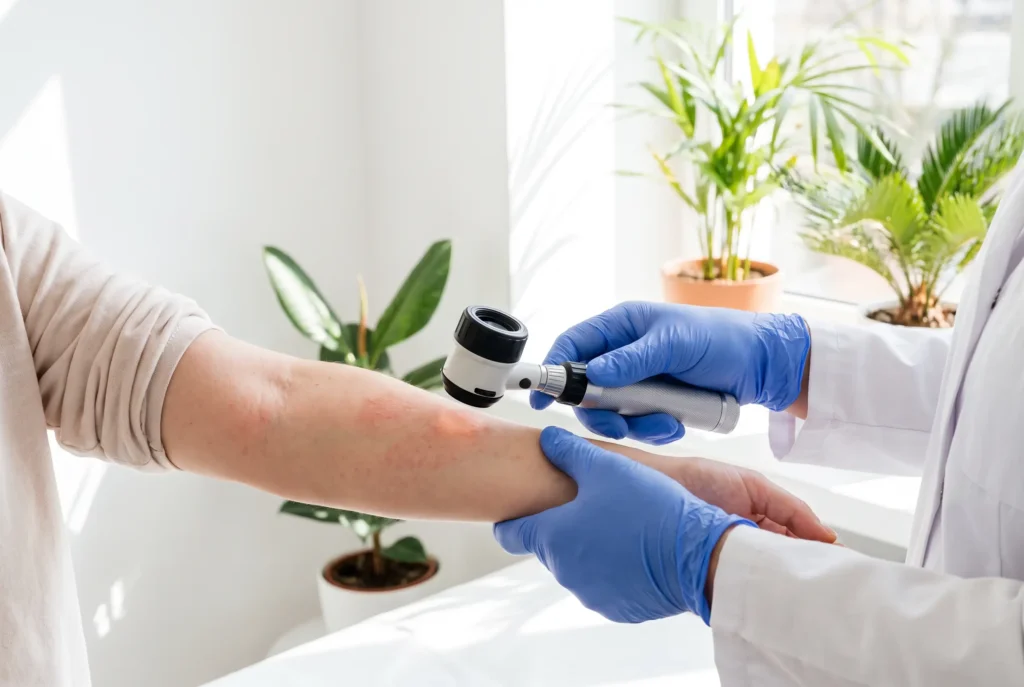
You did not feel it happening because there was a breeze and you were in and out of the water all afternoon. By evening your shoulders are scarlet, radiating heat, and you cannot bear the weight of a shirt. Phuket sits close to the equator and the sun here burns fair skin in roughly fifteen minutes at midday. Sunburn treatment in Bang Tao matters most where there is blistering, or where the burn arrives alongside heat illness.
First and second degree burns
First degree burns affect only the surface layer. The skin is red, hot and sore, and it settles over three to five days with peeling. Uncomfortable rather than dangerous.
Second degree burns go deeper and blister. These are genuine burns with a real risk of infection and scarring, and across a large area they cause meaningful fluid loss. Blistering sunburn across the shoulders and back should be assessed rather than managed with aftersun from the hotel shop.
What to do in the first hours
Get out of the sun completely, for the rest of that day and ideally the next. Cool the skin with a cool shower or cool damp cloths for twenty minutes at a time.
Never use ice or an ice pack directly on burnt skin — it causes further injury to tissue that is already damaged.
Drink considerably more than you think you need, because burnt skin loses fluid continuously. Take ibuprofen if you have no reason to avoid it, since it helps both the pain and the inflammation. Apply plain aloe vera or a light moisturiser once the skin has cooled, and avoid anything greasy, which traps heat.
Avoid the anaesthetic sprays sold in tourist shops. They frequently cause an allergic contact reaction on top of the burn, which is a genuinely miserable combination.
Do not burst the blisters
An intact blister is a sterile dressing your own body has made, and it is better than anything we can put on. Opening it creates an open wound in a hot, humid, sandy environment.
If a blister bursts on its own, keep it clean, leave the loose skin in place as a cover rather than trimming it, and dress it lightly — see wound dressing. Come in if the area becomes increasingly painful, red beyond the margin of the burn, or starts to discharge.
Sunburn with feeling unwell is different
Come in, or go to a hospital, if there is:
- Extensive blistering, especially over the back, chest or face
- Fever, chills or shivering after sun exposure
- Headache, nausea and dizziness
- Confusion or unusual drowsiness
- Fainting
- Signs of infection in a burnt area
Confusion after a day in the sun is heat stroke until proven otherwise and is a medical emergency — see heat exhaustion. If you are dehydrated and vomiting, an IV drip settles it quickly.
Not burning again for the rest of the trip
The sun here is strongest between 10am and 4pm, and the UV index regularly reaches levels classified as extreme. Cloud cover does not protect you, and neither does being in the water — you burn faster while swimming because water reflects light onto you and you cannot feel the heat building.
Use factor 50, apply it twenty minutes before going out, and reapply every two hours and after every swim regardless of what the bottle claims about being waterproof. A rash vest is more reliable than any cream for snorkelling, where the back of the neck, the backs of the legs and the ears burn severely because they face the sun for hours without anyone noticing.
Burnt skin burns again far more readily, so keep it covered for the remainder of the holiday.
Medication that makes you burn faster
A number of common medications cause photosensitivity, and people taking them burn in a fraction of the usual time — which is baffling if you do not know about it.
The common culprits are doxycycline, frequently taken as malaria prophylaxis, some other antibiotics, certain acne treatments including isotretinoin and topical retinoids, some diuretics, and St John’s wort. Alpha hydroxy acid skincare and recent chemical peels have the same effect.
If you are on any of these, treat the sun with considerably more respect than usual: factor 50 reapplied strictly, a hat, a rash vest, and genuine shade between 10 and 4. It is worth checking with the doctor when starting any new medication here rather than discovering the interaction on a beach — and if you are taking doxycycline for malaria prevention while on a trip that includes other travel medication, mention it, because the combination affects what else is sensible.
Frequently asked questions
How much does sunburn treatment cost?
A consultation with dressings for blistered areas is inexpensive. IV fluids for someone also dehydrated cost more and are quoted first.
Should I put ice on it?
No. Ice on burnt skin causes further damage. Use cool water or cool damp cloths instead.
Can a doctor come to my hotel?
Yes. A doctor hotel visit can assess a burn, dress blisters and give fluids in your room.
When will the pain stop?
First degree burns ease within two to three days and peel around day four or five. Blistered burns take one to two weeks and need keeping clean throughout.
Can I fly with severe sunburn?
Usually yes, though it is uncomfortable. Extensive blistering with fever should be assessed before you travel, since infection and fluid loss are the concerns.
Does a base tan protect me?
Barely. A tan gives roughly the equivalent of factor 3 protection, which is negligible against the UV levels here, and acquiring it caused skin damage in its own right.
Come in, or we come to you
Take Care Medical Clinic Bang Tao is open open 24 hours, 7 days a week on Bandon Road in Cherng Talay, a few minutes from Bang Tao Beach and Laguna Phuket. Walk in without an appointment, call +66 81 718 9080, or message us on WhatsApp. If you would rather not move, ask for a doctor hotel visit and we will come to your room.