Minor Surgery in Bang Tao
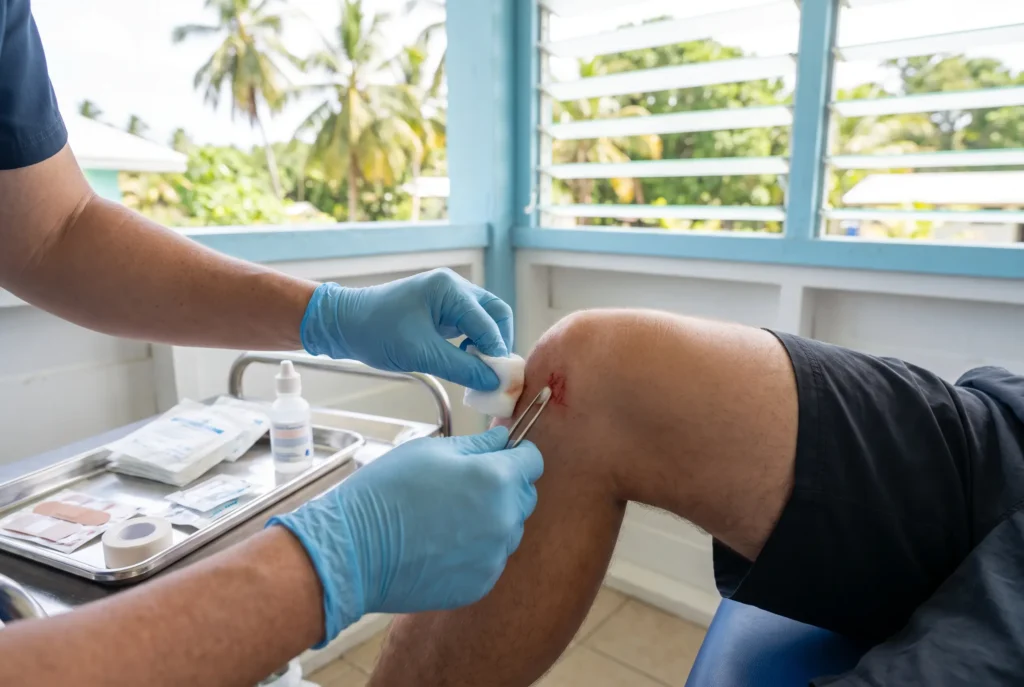
Some problems will not settle with a tablet and waiting. An abscess that keeps refilling, an ingrown toenail that has made shoes impossible, a cyst that catches every time you dry yourself, a fragment of glass still in the sole of a foot from a beach bar two nights ago. Minor surgery in Bang Tao handles these in a sterile treatment room under local anaesthetic, usually within an hour of walking in.
What we do under local anaesthetic
The list covers most of what a holiday actually produces:
- Draining abscesses and infected boils
- Ingrown toenail surgery, including removing the offending nail edge
- Removing small cysts, skin tags and lipomas
- Taking out splinters, glass, coral fragments and sea-urchin spines
- Draining infected blisters and painful haematomas
- Cleaning and closing wounds that need stitches
- Removing embedded fish hooks, which are commoner here than you would think
Abscesses need draining, not just antibiotics
This is worth understanding properly, because a lot of people arrive after a week of tablets wondering why nothing has changed.
Antibiotics travel in the blood. The inside of an abscess is a collection of pus with no blood supply running through it, so the antibiotic never reaches the bacteria in any useful concentration. A collection of pus has to be physically opened and drained, and until it is, the tablets are treating the rim rather than the problem.
Once drained the relief is immediate, because most of the pain of an abscess is pressure. The cavity is washed out and sometimes packed with a small wick that is changed over the following days.
Ingrown toenails in a sandal climate
We see a great many of these. Feet swell in the heat, sandals load the toe differently from closed shoes, sand works into the nail fold, and a nail edge that was merely annoying at home becomes an infected, throbbing mess within days of arriving.
Digging at it yourself reliably makes it worse and is how most of the infected ones start. The nail edge is removed under a local anaesthetic ring block at the base of the toe, which takes about twenty minutes. You walk out on it, though it needs to stay dry and out of the sea for several days. Where the problem keeps recurring, the nail bed at that edge can be treated so it does not grow back.
What the procedure is actually like
The area is cleaned and numbed. The anaesthetic injection stings for a few seconds and then the area goes properly numb — you will feel pressure and movement, which is normal and not a sign the anaesthetic has failed.
You stay awake throughout and can watch or resolutely not, as you prefer. Afterwards the wound is dressed and you get aftercare instructions, any antibiotics needed, and a date for a dressing change or suture removal. Most people drive or ride home, though not if it was a foot procedure.
What we do not do
We are honest about the ceiling. Anything requiring a general anaesthetic, deeper surgery, or a full operating theatre belongs in a hospital, and you will be referred rather than have it attempted here.
Go to a hospital directly for a wound with bone visible, a deep hand injury affecting how a finger moves, an abscess on the face near the eye, a rapidly spreading infection with fever, or any injury where a tendon may be cut. On that last one: if you cannot bend or straighten a finger through its normal range, treat it as a tendon injury until a surgeon says otherwise, because the window for repairing one well is measured in days.
Healing afterwards in this climate
The aftercare matters more here than it would at home. Keep the wound dry and out of the sea and pool until you are told otherwise — usually five to seven days, longer for a foot.
Heat and humidity slow wound closure and sand finds its way into everything, so a procedure that would be forgotten in three days in Europe genuinely needs watching here. Come back the same day if pain increases after forty-eight hours, if redness spreads outward, if there is fresh discharge, or if you develop a fever. Routine wound dressing changes are inexpensive and are the main thing that keeps a small procedure small.
Frequently asked questions
How much does minor surgery cost?
It depends entirely on the procedure. Draining a small abscess is inexpensive; an ingrown toenail with nail-bed treatment costs more. The doctor examines you and quotes the full price before starting.
Will I be awake?
Yes. Everything is done under local anaesthetic, so the area is numb but you are fully awake and can leave straight afterwards.
Can I swim afterwards?
Not for several days, and longer for a foot procedure. Sea and pool water infect fresh surgical wounds easily. You will be given a specific date rather than a vague instruction.
Do I need antibiotics as well?
Sometimes. A drained abscess often does not need them once the pus is out, while infection spreading into the surrounding skin does. The doctor decides on examination rather than by default.
Is it done at the clinic or can you come to my hotel?
Minor surgery is done at the clinic, where the lighting, positioning and sterile field are right. A doctor hotel visit can handle the follow-up dressings in your room.
Can I fly after a minor procedure?
Usually yes, within a day or two. Tell the doctor your flight date, because a wound that needs a dressing change mid-journey is worth planning for, and a foot procedure plus a long flight needs a little thought about swelling.
Come in, or we come to you
Take Care Medical Clinic Bang Tao is open open 24 hours, 7 days a week on Bandon Road in Cherng Talay, a few minutes from Bang Tao Beach and Laguna Phuket. Walk in without an appointment, call +66 81 718 9080, or message us on WhatsApp. If you would rather not move, ask for a doctor hotel visit and we will come to your room.