Coral cut treatment in Bang Tao
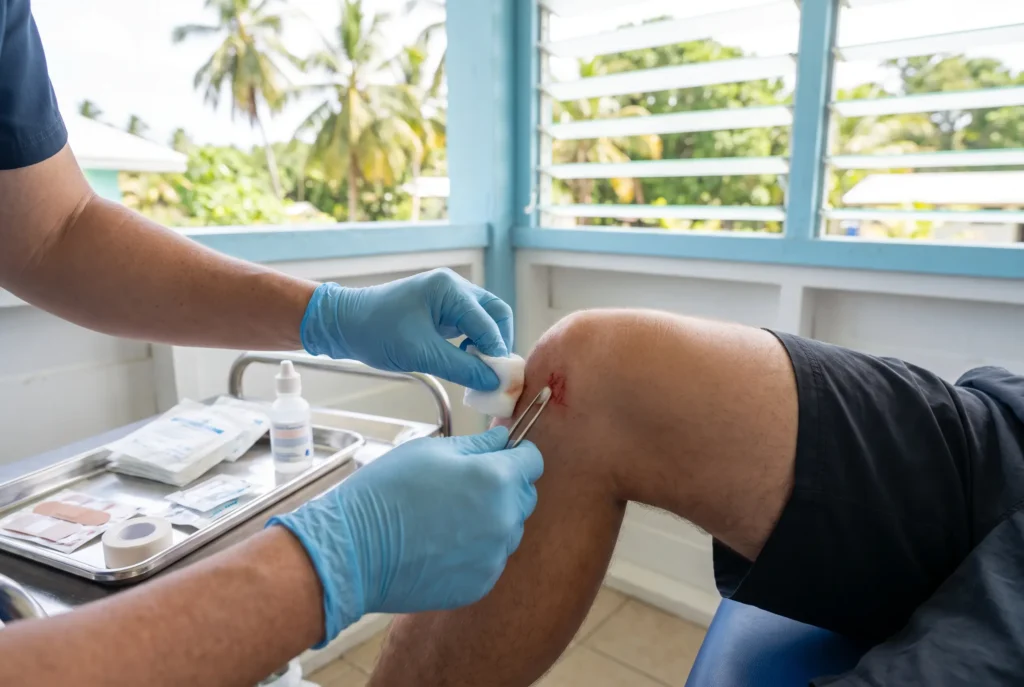
It seemed like nothing at the time — a scrape across the shin climbing back onto the boat, or a hand put down on rock while snorkelling. Three days later it is red, swollen and refusing to heal. Coral cuts behave differently from ordinary grazes because of what gets left behind in the wound. Coral cut treatment in Bang Tao is about cleaning it out properly before it becomes an infection that outlasts the holiday.
Why coral cuts turn nasty
Three things happen simultaneously, and each makes the others worse.
Fragments of coral and calcium break off into the wound and act as foreign bodies that the skin cannot expel. Living organisms and stinging cells from the coral surface cause an inflammatory reaction of their own. And marine bacteria get in, including Vibrio species that simply do not exist on land and do not respond to the antibiotics people typically have in a travel kit.
That combination means a shallow scrape which would heal in days at home can become a deep, stubborn infection here within seventy-two hours.
What to do straight away
Get out of the water and rinse the wound with clean fresh water. For coral cuts, unlike jellyfish stings, fresh water is exactly right.
Scrub gently to lift out fragments. It is uncomfortable and it is necessary — this is the step that determines how the next two weeks go. Use tweezers for anything visible. Clean with antiseptic, then cover with a clean dry dressing.
Do not stitch or tape a coral wound closed, and do not let anyone else do so. Closing bacteria and coral fragments inside is precisely how these become abscesses. Sea urchin spines are handled slightly differently — soak in hot water and come in, since embedded spines usually need removing under local anaesthetic.
Signs it is infected
Come in the same day if you see:
- Redness spreading outward from the wound
- Increasing pain after day two
- Swelling, heat and tightness around it
- Pus or discharge
- A red streak running up the limb
- Fever or feeling generally unwell
A red streak travelling up the leg or arm means infection is spreading through the lymphatic system, and that needs antibiotics today — see cellulitis treatment.
How we treat it
The wound is cleaned thoroughly under local anaesthetic where needed, and every fragment we can find is removed. That thorough clean is essentially the whole treatment, and it is the part most people skip when managing it themselves.
We check tetanus cover and give a booster if it is due. Antibiotics are used where there are signs of infection, and the choice genuinely matters — marine bacteria do not reliably respond to the antibiotics used for ordinary skin infections, so this is a poor wound to self-treat with leftover tablets from home.
You will need wound dressing changes every day or two until it closes.
Healing while still on holiday
Stay out of the sea until the wound has closed. This is the difficult part and it is not negotiable — going back into the water with an open coral wound is the reliable way to turn a minor injury into the thing that defines the trip.
Keep it covered during the day, change the dressing after showering, and let air at it overnight in a clean room. Expect a coral cut to take longer than an equivalent graze from a pavement, frequently two weeks or more.
If you are diving, tell the dive school. Most will not let you dive with an open or infected wound, and they are right to refuse.
Snorkelling and diving without getting cut
Nearly every coral cut we treat is on a shin, a knee, a foot or a hand, and nearly all of them happen in the same few situations: standing up in shallow water, climbing on or off a boat, or steadying yourself on what looks like rock.
The single most effective preventive measure is not touching the bottom. Beyond that: reef shoes or fins with proper foot pockets, a rash vest or thin wetsuit that covers the forearms, gloves if you are handling boat ladders, and never standing on coral to adjust a mask.
It is also worth knowing that fire coral and hydroids sting as well as cut, producing a burning welt alongside the graze — that is treated more like a jellyfish sting in the first minutes, and the wound care follows afterwards. If you are on a liveaboard or a day trip far from shore, carry a small kit with clean fresh water, tweezers, antiseptic and dressings, because a wound cleaned properly at hour one is a different problem from one cleaned at hour eight.
Frequently asked questions
How much does treatment cost?
The first visit costs most, as it includes the doctor, cleaning, any anaesthetic and the dressing. Follow-up dressing changes are charged as short nurse visits.
Do I need a tetanus injection?
If your last one was more than five years ago, yes. Coral wounds are dirty by definition — see travel vaccinations.
Can I keep diving?
Not with an open or infected wound. Once it has closed and there is no redness, you can return to the water.
Why is it not healing?
Almost always a fragment left in the wound, or repeated sea water exposure. Both are fixable, and both need the wound looked at properly rather than another cream.
Can a doctor come to my hotel?
Yes for dressing changes on a doctor hotel visit. The first thorough clean is better done at the clinic with proper light and instruments.
How long until it heals?
A shallow, well-cleaned coral cut closes in about ten days. A deeper one, or one that keeps getting wet, takes two to three weeks and sometimes longer.
Come in, or we come to you
Take Care Medical Clinic Bang Tao is open open 24 hours, 7 days a week on Bandon Road in Cherng Talay, a few minutes from Bang Tao Beach and Laguna Phuket. Walk in without an appointment, call +66 81 718 9080, or message us on WhatsApp. If you would rather not move, ask for a doctor hotel visit and we will come to your room.